
How to Think About Pick-to-Light ROI
A practical guide to evaluating Pick-to-Light ROI using pick volume, labor time, error cost, and warehouse workflow fit.
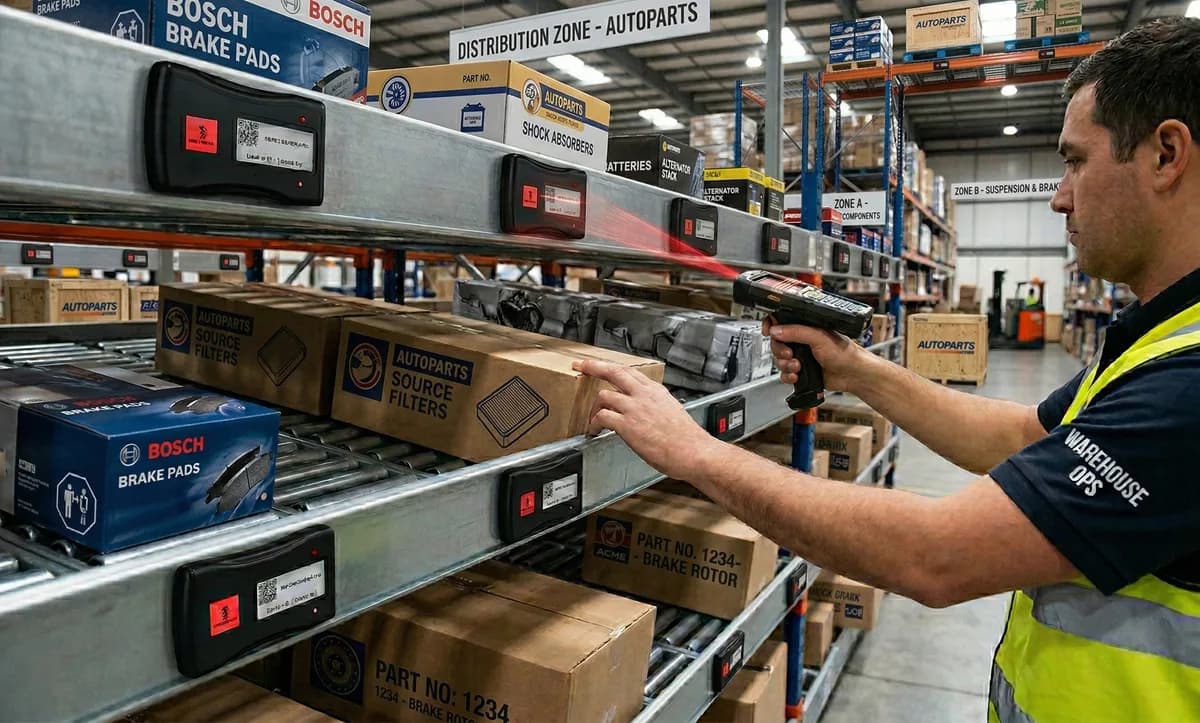
Pick-to-Light ROI depends on more than hardware cost. The useful question is where the system reduces labor time, avoidable errors, and process friction.
A clear ROI model starts with your current picking time, order volume, wage assumptions, error rate, and the cost of correcting mistakes.
Key Takeaways
- check_circleROI depends on order volume, labor time, and error cost.
- check_circleThe best rollout zone is usually where errors or search time are measurable.
- check_circleUse the ROI calculator to test assumptions before planning a pilot.
Start With the Current Workflow
Measure how long a typical order takes today and how many orders are processed per day.
Then identify where time is lost: searching for locations, checking paper, correcting picks, or training new team members.
Estimate Error Cost
Mis-picks can create replacement shipments, returns, customer service time, credits, and lost customer confidence.
Even a small improvement in accuracy can matter when order volume is high or the cost of correction is significant.
Use the Calculator as a Planning Tool
A calculator should not replace a workflow review, but it can show which variables have the largest impact.
For many warehouses, labor time and error cost are the key inputs to test first.
Evaluate your Pick-to-Light ROI
Compare picking time, order volume, and error cost with the Hero Bot IoT Pick-to-Light ROI calculator.
Open ROI Calculatorcalculate